
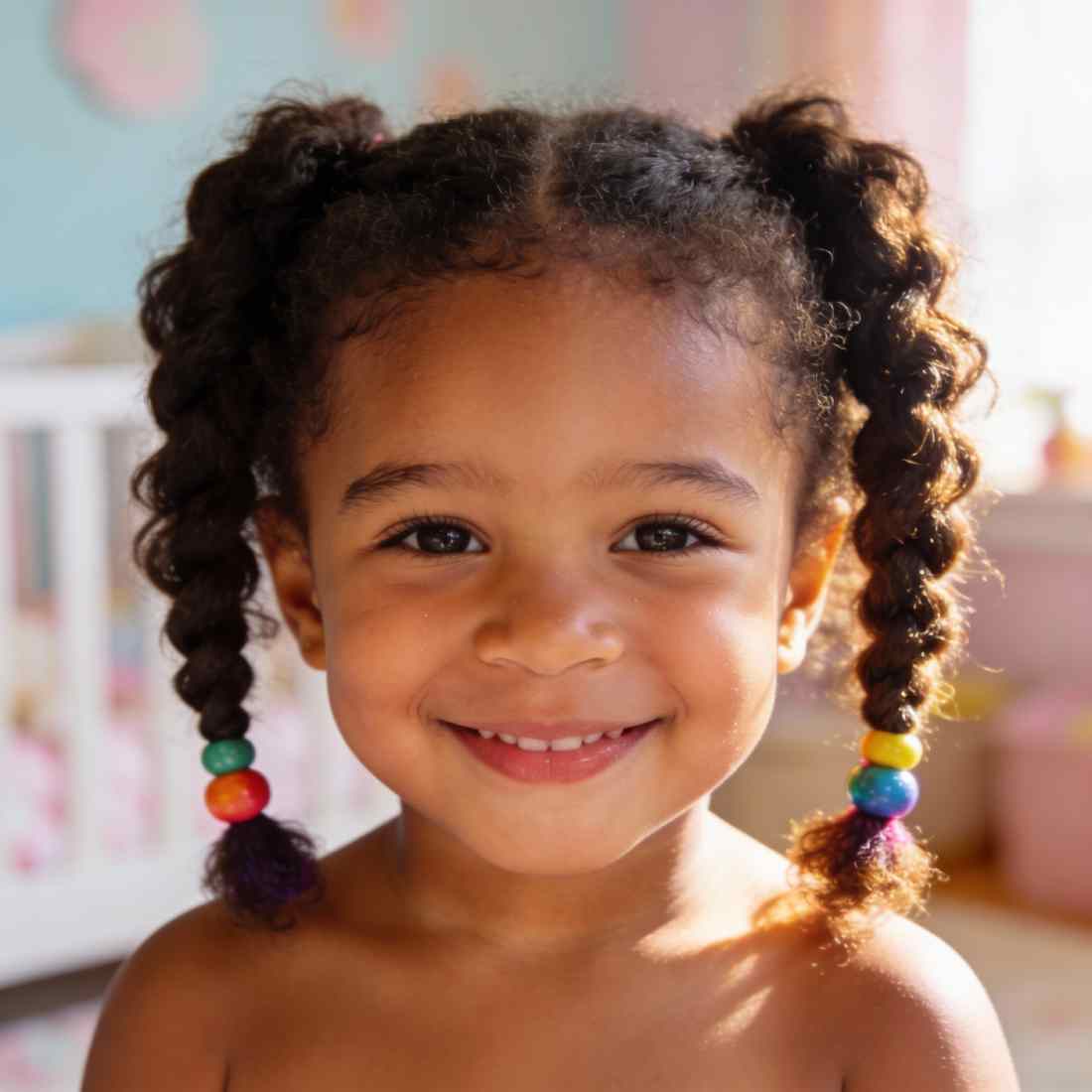
Are you looking for easy braids for tender headed toddlers? We know the struggle. The morning routine turns into a battleground of tears, wiggling, and frustration the moment the comb comes out. You want your little one’s hair to be protected and neat, but you also want them to have a positive relationship with their hair—not one associated with pain.
If you have a child with a sensitive scalp, the key is minimizing tension while maximizing style. This guide covers 10 gentle styles that look adorable, require less “chair time,” and keep the tears away.
Why No Extensions Work Best for Sensitive Scalps
When styling a tender-headed child, the first rule is often to skip the adding hair. While extensions look great, they add significant weight and tension to the follicle.
For a sensitive toddler, tension is the enemy. Synthetic braiding hair requires a tighter grip at the root to stay secure, which causes that immediate “ouch” factor. By sticking to natural hair styles, you eliminate the extra weight dragging on the scalp. Plus, natural hair styles are generally quicker to install—meaning your toddler doesn’t have to sit still for hours, which reduces their overall stress levels.
10 Low-Tension Styles for Tender Heads
Here are our top picks for styles that are quick, cute, and gentle on the edges.
1. Jumbo Two-Strand Twists
Twists are the ultimate low-tension alternative to braids. They require much less pulling at the root than cornrows.
- Why it works: You can do these loosely, and they are easy to take down without tangling.
2. The “Bubble” Braid Ponytails
Instead of braiding, use snag-free hair ties to create “bubbles” down the length of the hair.
- Why it works: There is zero weaving involved, meaning no pulling at the scalp. Tip: Soak hair ties in oil before use.
3. Two Large French Braids (The “Frozen” Style)
Instead of 10 tiny cornrows, do two large, loose French braids or flat twists going straight back.
- Why it works: Fewer braids mean less manipulation and a faster finish time.
4. Half-Up, Half-Down with Loose Plaits
Part the hair from ear to ear. Put the back in a loose puff and do 2-4 large individual plaits in the front.
- Why it works: Keeps hair out of their face without tightening the sensitive nape area.
5. The “Halo” Braid
One large loose braid that circles the head.
- Why it works: It’s a protective style that tucks away ends but distributes tension evenly around the whole head rather than focusing it on one spot.
6. Four Big Cornrows
Simple, classic, and fast. Section the hair into four large parts and braid straight back.
- Why it works: Large sections require less grip strength to hold than small sections.
7. Puffs with Braided Bangs
Leave the majority of the hair in two cute afro puffs and only braid a small section of bangs in the front.
-
Why it works: You are only braiding a small area, making the “painful part” over in 5 minutes.
8. Rubber Band Method (Loosely)
Use the rubber band method to create grid patterns, but ensure the bands are not popping tight against the scalp.
- Why it works: It creates a geometric look without the tight pulling of a stitch braid.
9. Box Braids with Large Parts
If you want individual plaits, make the parts large (jumbo size).
- Why it works: Bigger bases support the braid better, reducing the pulling sensation when the child swings their head.
10. Bantu Knots
Section the hair and twist it into small buns.
- Why it works: As long as you don’t twist too tight at the base, this keeps ends protected with minimal manipulation.
FAQ: Common Questions About Tender Headed Styling
How long do these styles last?
This is the most common question we get! Generally, natural hair styles without extensions last between 3 to 7 days, depending on the child’s activity level and your nighttime routine.
- Twists and loose braids: Usually look fresh for 3–5 days.
- Cornrows (even large ones): Can last up to 7–10 days if wrapped with a silk scarf at night.
- Bubble braids: usually need to be redone every 2–3 days as the bands can slip.
How can I numb the scalp before braiding?
We don’t recommend chemical numbing agents for toddlers. However, a great trick is to use a cold spray (like a water/aloe mix kept in the fridge) or apply a cool, soothing oil (like peppermint oil diluted in jojoba oil) to the scalp 10 minutes before styling. The cooling sensation can distract the nerves.
What is the best detangler for tender heads?
Look for a detangler with “slip” (ingredients like marshmallow root or slippery elm). Always detangle on damp hair starting from the ends and working your way up to the roots to prevent painful snagging.